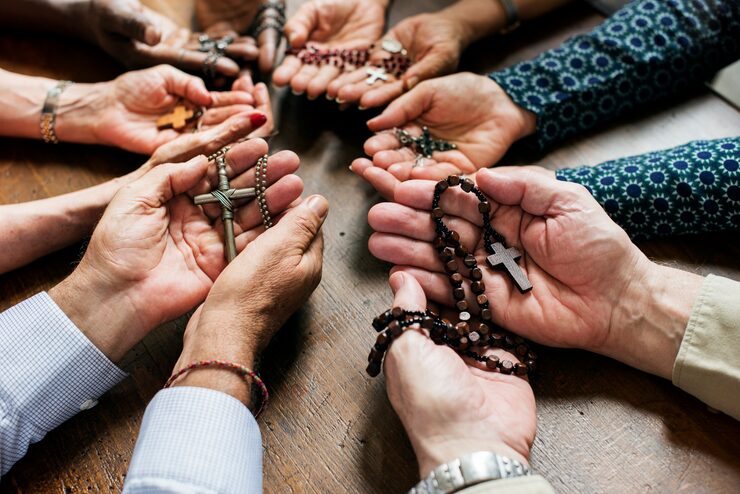
can help organize the family prayer time or choose intentions for the evening.
Giving children an active role can help them feel that they are participants rather than simply observers.
Over time, familiarity can make prayer feel more natural.
Teaching Through Example
Children learn many things by watching the adults around them.
When parents make time for prayer, children can see that faith is something practiced consistently.
They learn that prayer is not only for moments of crisis.
It can also be part of gratitude, family life, reflection, and everyday routine.
Parents do not need to have perfect answers.
Their example can be more important than explanations.
When children see their family praying together, they experience faith as something shared.
Praying for Family Needs
One of the simplest ways to make family prayer meaningful is to include intentions that relate to real life.
Families can pray for:
- A family member facing a difficult situation
- Children preparing for an important event
- Someone who is sick or struggling
- Friends who need support
- Peace within the family
- Guidance when making important decisions
- Strength during difficult periods
- People experiencing hardship
- Unity within the community
- Peace throughout the world
These intentions can help children understand that prayer is connected to real people and real circumstances.
The Rosary as a Moment of Peace
Family life can sometimes become noisy and hectic.
Homework needs to be completed. Meals need to be prepared. Responsibilities need to be managed.
The Rosary can create a different atmosphere.
For a few moments, the family can slow down and focus on prayer.
This quiet time can be valuable even when the rest of the day has been stressful.
The purpose is not necessarily to make every problem disappear.
Instead, it gives the family a chance to pause, reflect, and place those concerns within a spiritual context.
Building Family Traditions
Traditions can help families develop a stronger sense of identity.
A family may have traditions around holidays, birthdays, meals, or special occasions.
Prayer can become another meaningful tradition.
Perhaps the family prays the Rosary on a particular evening each week.
Perhaps they pray together during important family milestones.
Maybe they gather during difficult times to pray for someone who needs support.
These repeated practices can become memories that children carry with them as they grow older.
Praying Together During Difficult Times
Families often turn to prayer when circumstances become challenging.
A difficult situation can bring uncertainty, fear, or emotional stress.
Gathering together for prayer can provide a way for family members to support one another spiritually.
The Rosary does not promise that every difficulty will immediately disappear.
But prayer can provide a space for reflection and trust.
It can also remind family members that they can face difficult periods together rather than feeling completely alone.
The Importance of Family Unity
Family unity does not mean everyone agrees about everything.
Families naturally have different personalities, opinions, and experiences.
Unity can instead mean maintaining a sense of connection even when life becomes complicated.
Shared prayer can support that connection.
When family members regularly sit together, listen together, and pray for one another, they create opportunities to strengthen relationships.
The Rosary can become one of the practices that helps maintain that connection.
Learning Patience Through Prayer
The repeated nature of the Rosary can encourage patience and attentiveness.
In a world where people are accustomed to fast communication and constant entertainment, sitting quietly and praying can require a different mindset.
Children may initially find it difficult.
Adults may also become distracted.
That is normal.
Family prayer does not need to be perfect.
Over time, the practice itself can encourage greater patience, focus, and willingness to slow down.
Bringing Different Generations Together
The Rosary can connect different generations within a family.
Grandparents may have their own experiences and traditions related to the prayer.
Parents can introduce it to their children.
Older children can help younger siblings.
This creates an opportunity for faith to be shared across generations.
A grandparent teaching a grandchild a prayer is more than a religious lesson.
It can also become a personal family connection.
Stories, memories, and traditions can pass from one generation to another.
Learning From the Mysteries
The mysteries of the Rosary provide opportunities for reflection.
The Joyful, Sorrowful, Glorious, and Luminous Mysteries encourage people to reflect on different aspects of Christ’s life and the Christian faith.
For families, these reflections can lead to conversations.
Parents can explain ideas in ways children can understand.
Older children can share their own thoughts.
Family members can consider how themes such as joy, suffering, sacrifice, hope, and renewal relate to everyday life.
This can make prayer an opportunity for spiritual learning as well as devotion.
Creating a Distraction-Free Environment
The environment can influence family prayer.
Families do not need a special chapel at home.
A quiet corner, living room, dining area, or another comfortable space can work.
Turning off televisions and putting phones aside can help everyone remain focused.
Some families may choose to keep a Rosary or religious image in their prayer area as a visual reminder.
The purpose is simply to create a setting where everyone knows it is time to pause and pray.
When Families Struggle to Stay Consistent
It is normal for routines to change.
Vacations, school schedules, work commitments, illness, and unexpected events can interrupt family prayer.
Missing a day or week does not mean the practice has failed.
Families can simply begin again.
A sustainable prayer routine should allow for real life.
The goal is not perfection.
The goal is to keep making space for prayer whenever possible.
Learning From Community Prayer
Family prayer can also be strengthened by participating in broader Catholic prayer communities.
When families see other people praying together, they may feel encouraged to continue their own traditions.
Community prayer also shows children that faith is shared by people beyond their immediate household.
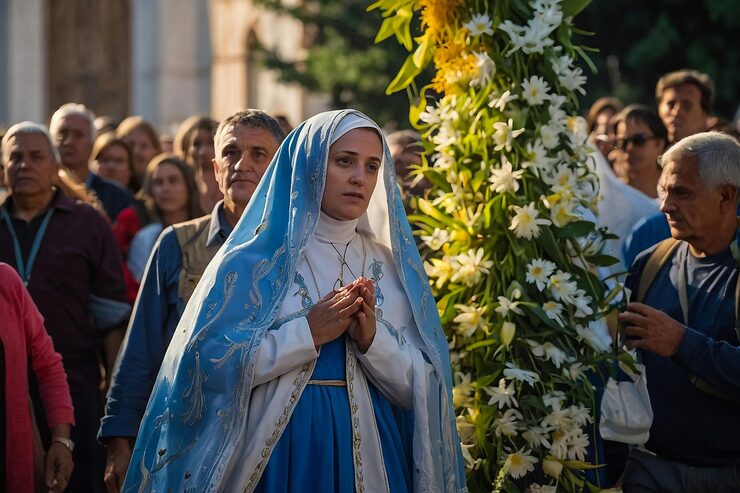
The Missionaries of Our Lady of Fatima places particular importance on communal prayer and Rosary Vigils.
These gatherings demonstrate how the Rosary can bring groups of people together around shared intentions such as families, unity, and peace.
The Role of the Missionaries of Our Lady of Fatima
Prayer has been an important part of the Missionaries of Our Lady of Fatima’s work.
The mission’s emphasis on the Rosary reflects its desire to encourage people to come together in prayer and reflection.
Its prayer-centered approach also connects with its broader commitment to families and communities.
The mission recognizes that spiritual support can be meaningful for people going through difficult circumstances.
Prayer provides an opportunity for individuals and families to bring their concerns, hopes, and intentions before God.
Creating a Future Space for Family Prayer
The Missionaries of Our Lady of Fatima has a vision of building a Chapel and community home on 10 acres in Palmdale, California.
The planned space is intended to provide opportunities for prayer and worship as well as community gatherings, meals and outreach, counseling, family support, and faith-based activities.
For families, a dedicated space could provide opportunities to pray together outside the home.
It could also create connections between families who share similar values.
A chapel can provide quiet space for individual prayer, while the wider community environment can support gatherings and activities.
How Families Can Begin Praying the Rosary Together
Families interested in developing a Rosary tradition can start simply.
Choose a Regular Time
Pick a time that works realistically for everyone.
Start With What You Can Manage
If praying the entire Rosary feels difficult at first, families can begin by learning the prayers and gradually developing a routine.
Give Everyone a Role
Let different family members lead prayers or announce the mysteries.
Include Family Intentions
Allow each person to suggest someone or something they would like the family to pray for.
Keep the Environment Peaceful
Reduce distractions and create a comfortable place for prayer.
Be Patient
Children and adults may become distracted. The important thing is continuing to make the effort.
Making Prayer a Shared Experience
Family prayer becomes more meaningful when everyone feels included.
Instead of one person doing all the speaking, family members can participate according to their age and ability.
Parents can guide.
Children can learn.
Teenagers can lead.
Grandparents can share traditions.
This turns prayer into a shared experience.
It also creates opportunities for family members to support one another spiritually.
The Long-Term Value of Family Prayer
A family prayer routine may seem small when compared with the many responsibilities of everyday life.
But small traditions can have lasting influence.
A child who grows up praying with their family may carry those memories into adulthood.
They may remember the evenings when everyone gathered together.
They may remember prayers said for a family member during a difficult time.
They may remember a grandparent teaching them a prayer.
These memories can become part of their spiritual and family identity.
Conclusion
The Rosary can provide Catholic families with a simple and meaningful way to spend time together in prayer.
It can create moments of peace in busy schedules, encourage family unity, teach children about faith, and provide opportunities to pray for people facing difficult circumstances.
The value of praying the Rosary as a family is not found in creating a perfect routine. It is found in making a consistent effort to come together.
The Missionaries of Our Lady of Fatima reflects this spirit through its commitment to prayer, Rosary gatherings, families, and community support.
Whether prayer takes place around a family table, in a quiet room, or within a dedicated chapel, the purpose remains the same: to create time for faith, reflection, and connection.
When families pray together, they create more than a routine.
They create a shared tradition that can strengthen relationships and continue from one generation to the next.