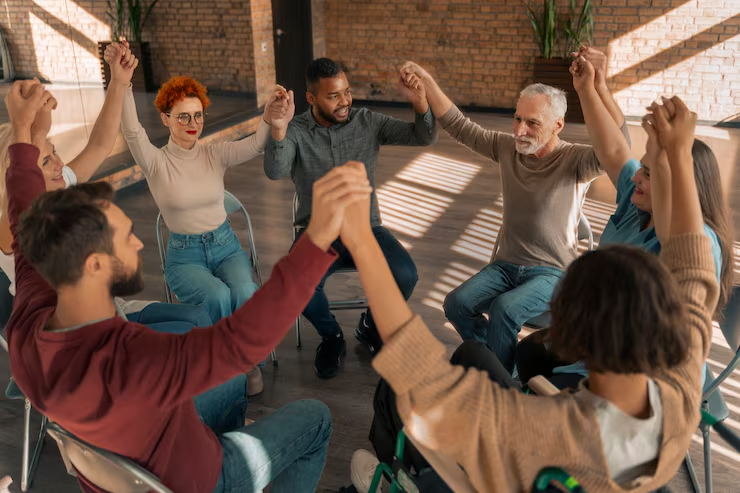
A strong community is built by people who are willing to care about one another.
It is easy to think of a community as simply a group of people living in the same area. In reality, a healthy community is much more than geography. It is a network of relationships, shared values, support, kindness, and a willingness to stand together when someone is going through a difficult time.
Faith can play an important role in creating this kind of community.
Through prayer, service, fellowship, and compassion, faith-based communities can encourage people to look beyond themselves and become more aware of the needs around them. When these values are put into practice, they can help create communities where people feel connected, supported, and welcomed.
The Missionaries of Our Lady of Fatima reflects this approach by bringing prayer and practical community service together. Its focus on serving people in need, supporting families, encouraging prayer, and building community demonstrates how spiritual values can become part of everyday life.
What Makes a Community Strong?
A strong community is not necessarily one with the most resources.
It is one where people are willing to support each other.
Community strength can come from simple things: neighbors checking on one another, families sharing responsibilities, volunteers giving their time, people praying together, or individuals offering encouragement when someone is struggling.
Trust is another important part of a healthy community.
When people know they can turn to others for support, difficult circumstances can become easier to navigate. A person who is experiencing hardship may not have every problem solved, but knowing that others care can provide meaningful encouragement.
This is where community service and faith can make a difference.
The Role of Faith in Community Life
Faith can give people a shared foundation.
For many Christians, faith is not limited to personal prayer or worship. It also influences how they treat other people and how they respond to those experiencing hardship.
Christian values such as compassion, generosity, forgiveness, humility, and service can encourage people to become more involved in their communities.
Faith can also create opportunities for people to come together.
Prayer gatherings, church activities, charitable projects, community meals, and volunteer programs can bring people from different backgrounds together around a common purpose.
These experiences can strengthen relationships and create a greater sense of belonging.
Prayer Creates Connection
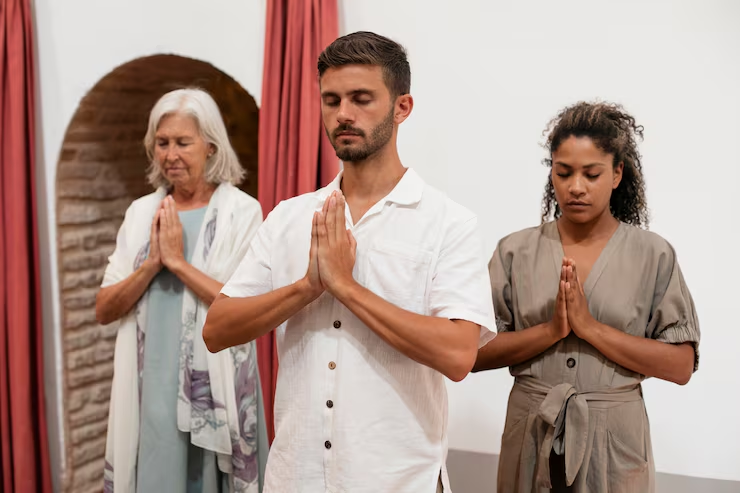
Prayer is deeply personal, but it can also bring people together.
When individuals pray as a community, they share a common moment of reflection and spiritual connection.
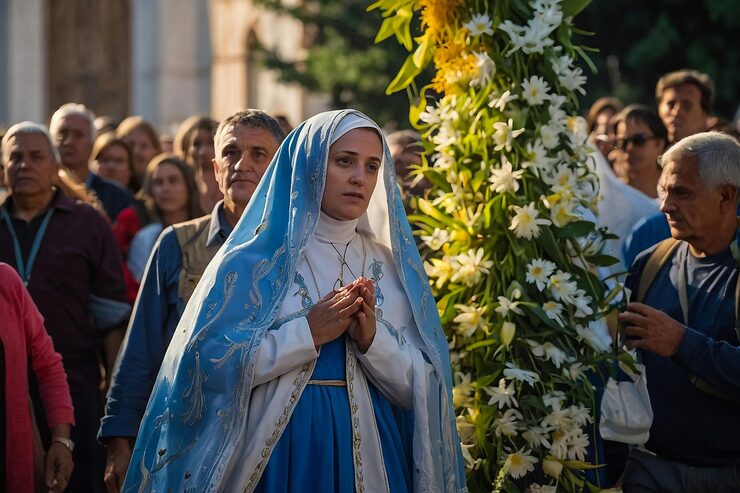
The Missionaries of Our Lady of Fatima places prayer at the center of its community-focused mission. Its Rosary Vigils provide an example of how people can gather for extended periods of prayer and reflection.
Community prayer can help people focus on concerns that extend beyond their individual lives.
Families, people experiencing hardship, communities, unity, and peace can all become subjects of prayer.
This shared spiritual experience can remind people that they are part of something larger than themselves.
Service Turns Compassion Into Action
Prayer can inspire reflection, but service provides an opportunity to act.
A community becomes stronger when people are willing to respond to real needs.
That response can take many forms.
Someone may volunteer to help a family. Another person may assist with a community event. Someone else may donate resources. A group may organize an outreach activity.
The specific action is less important than the willingness to contribute.
Service shows people that community values are not simply words. They can be demonstrated through everyday actions.
Why Community Outreach Matters
Community outreach creates connections between people who may otherwise never meet.
A person volunteering at an outreach event may interact with families facing circumstances they have never personally experienced. These encounters can create greater understanding and reduce the distance between different parts of a community.
Outreach can also help identify needs that may otherwise remain unnoticed.
When people actively engage with their communities, they become more aware of challenges affecting others.
This awareness can encourage additional support and cooperation.
Community outreach is therefore not only about providing assistance. It is also about building relationships.
Creating a Place Where People Feel Welcome
Physical spaces can play an important role in community building.
A welcoming place gives people somewhere to gather, pray, talk, receive support, and participate in activities.
The Missionaries of Our Lady of Fatima has a vision of building a Chapel and community home on 10 acres in Palmdale, California.
The planned space is intended to support prayer and worship while also providing opportunities for community gatherings, meals and outreach, counseling, family support, and faith-based activities.
The importance of such a space goes beyond the building itself.
A dedicated community environment can provide a consistent place where people know they can gather and connect.
Bringing Different Generations Together
Strong communities include people of different ages.
Children, young adults, parents, and older generations can all contribute something valuable.
Older members of a community can share experience and wisdom. Younger people can bring energy, new ideas, and a willingness to participate in different ways.
Faith-based activities can create opportunities for these generations to interact.
Prayer gatherings, volunteer projects, community meals, and outreach programs can bring people together around shared values rather than differences in age.
This can help create stronger relationships between generations.
Supporting Families Strengthens Communities
Families are an important part of every community.
When families experience hardship, the effects can extend beyond one individual. Parents may experience stress, children may feel uncertainty, and household relationships can become more difficult.
Community support can provide encouragement during these situations.
Helping families does not always mean solving every problem for them. Sometimes it means providing practical assistance, listening without judgment, offering prayer, or connecting them with supportive resources.
When families feel supported, they are better positioned to remain connected to their communities.
That makes family support an important part of community development.
The Importance of Compassionate Listening
Community service is often associated with giving.
But listening is also a form of service.
People going through difficult circumstances may need someone who is willing to hear their concerns without immediately judging or criticizing them.
A compassionate conversation can help someone feel acknowledged.
This does not mean volunteers or community organizations need to solve every personal problem. It simply means creating an environment where people are treated with respect.
Listening can build trust, and trust is essential to strong communities.
Volunteers Help Build Community
Volunteers are often the people who turn community ideas into reality.
They organize events, prepare activities, support outreach, welcome participants, assist families, and contribute their skills wherever they are needed.
Volunteering also creates connections among the volunteers themselves.
People who work together toward a shared goal often develop relationships that continue beyond the specific project.
Someone may join a volunteer opportunity because they want to help, but they may also discover new friendships, stronger community connections, and a deeper sense of purpose.
Service Does Not Have to Be Complicated
People sometimes hesitate to get involved because they believe meaningful service requires a major commitment.
It does not.
Community service can begin with small actions.
You can:
- Volunteer for a local outreach activity
- Participate in a prayer gathering
- Help organize a community event
- Donate resources when possible
- Support families experiencing hardship
- Check on someone who may be struggling
- Share information about community programs
- Encourage friends and family to become involved
The important thing is consistency.
Small contributions from many people can create meaningful community support.
Faith and Service Work Better Together
Prayer and service should not be viewed as competing activities.
They can strengthen each other.
Prayer can help people reflect on compassion and responsibility. Service gives people an opportunity to put those values into practice.
A person can pray for people experiencing hardship and also find a practical way to support them.
Likewise, someone involved in community service may find that prayer provides the spiritual motivation and strength needed to continue serving.
Together, these practices create a more complete approach to community care.
Building a Culture of Generosity
Strong communities develop when generosity becomes part of everyday culture.
People begin looking for ways to help rather than waiting for someone else to act.
A culture of generosity does not mean everyone gives the same thing.
One person may have financial resources. Another may have time. Someone else may have professional skills. Another person may simply be good at listening and encouraging others.
Every contribution can have value.
When people understand that they all have something to offer, community participation becomes more accessible.
Making People Feel They Belong
Belonging is one of the most important aspects of community.
People want to feel that they are accepted, respected, and valued.
Faith-based organizations can help create this feeling by developing welcoming environments where people can participate regardless of their circumstances.
Community gatherings, prayer activities, volunteer opportunities, and outreach programs can provide opportunities for people to connect.
A person who feels welcomed is more likely to become involved.
Over time, that involvement can strengthen the entire community.
The Long-Term Impact of Community Service
Community building does not happen overnight.
It requires patience and continued effort.
A single volunteer project may help several people today. But a consistent culture of service can influence a community for years.
Children who grow up seeing adults volunteer may learn that helping others is a normal part of life.
Young people who participate in service may carry those values into adulthood.
Families who receive support may eventually become supporters themselves.
This creates a cycle where people who once needed help can later help others.
That is one of the lasting possibilities of community service.
The Missionaries of Our Lady of Fatima and Community Building
The Missionaries of Our Lady of Fatima brings together several elements that contribute to a stronger community: prayer, outreach, service, family support, and a commitment to people experiencing hardship.
Its vision for a Chapel and community home represents an opportunity to create a dedicated environment where these activities can continue to develop.
The goal is not simply to provide a place for religious activities.
It is to create a community-centered space where people can pray, gather, receive support, share meals, participate in outreach, and build relationships.
This broader vision reflects the idea that faith and community service can work together.
How You Can Help Build a Stronger Community
Everyone has the ability to contribute to community life.
Start with what you can realistically offer.
If you have time, volunteer.
If you have resources, consider donating.
If you enjoy organizing, help with community activities.
If prayer is important to you, pray for families and people experiencing hardship.
If you have useful skills, consider sharing them with a community organization.
And if you are unsure where to begin, simply start by paying attention to the needs around you.
Sometimes the first step toward stronger community involvement is noticing where help is needed.
Conclusion
Strong communities are built through relationships, compassion, faith, and consistent service.
Prayer can bring people together spiritually. Service can connect them through practical action. Community outreach can create opportunities to support those facing hardship. And welcoming spaces can give people somewhere to gather, connect, and grow.
The Missionaries of Our Lady of Fatima carries these ideas through its commitment to prayer, helping people in need, supporting families, community outreach, and its vision for a Chapel and community home.
Building a stronger community does not require one person to do everything.
It requires many people to do what they can.
A prayer, a meal, a volunteer hour, a donation, a conversation, or a simple act of kindness can all become part of something greater.
When people choose to serve one another with faith and compassion, they help create communities where people are not only supported during difficult times but also reminded that they belong.